
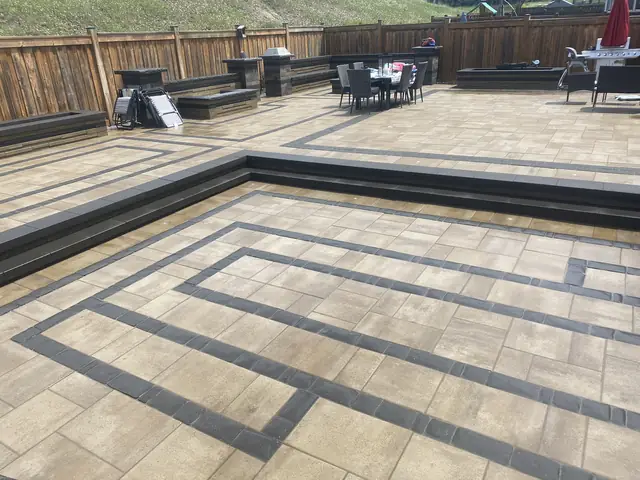
Short answer: Seal interlock or pavers only after they are fully cleaned, re-sanded with polymeric sand and completely dry. A natural-look sealer protects with little change in appearance, while an enhanced or wet-look sealer deepens colour. Sealing helps resist stains, salt and weed growth, and needs reapplying every few years depending on sun, traffic and the product.
Why seal interlock and pavers
Sealing helps protect the surface and joint sand from oil, salt, stains and weathering, and makes regular cleaning easier. It does not fix settled or uneven stones.
Choosing a finish
| Finish | Look | Consider |
|---|---|---|
| Natural / matte | Looks like clean, unsealed stone | Subtle protection |
| Enhanced / wet look | Deepens colour, adds sheen | Shows wear and needs timely re-coating |
The right order of work
- Wash. Remove dirt, algae, efflorescence and old sand.
- Re-sand. Fill joints with polymeric sand and activate as directed.
- Dry. The surface must be dry before sealing, which depends on weather.
- Seal. Apply evenly in suitable temperatures.
Our wash, sand and seal offer covers all three steps, and you can estimate it with the interlock cost calculator. For cleaning and re-sanding on their own, read the interlock cleaning and re-sanding guide.
How long it lasts
Life depends on the product, sun exposure, traffic and snow clearing. Ask your contractor for the specific product and recommended re-seal interval.
Need help with your property?
Living Water has cleaned and restored 7,500+ properties across Toronto and the GTA since 1998. Call (416) 663-8000 or request a free quote.