
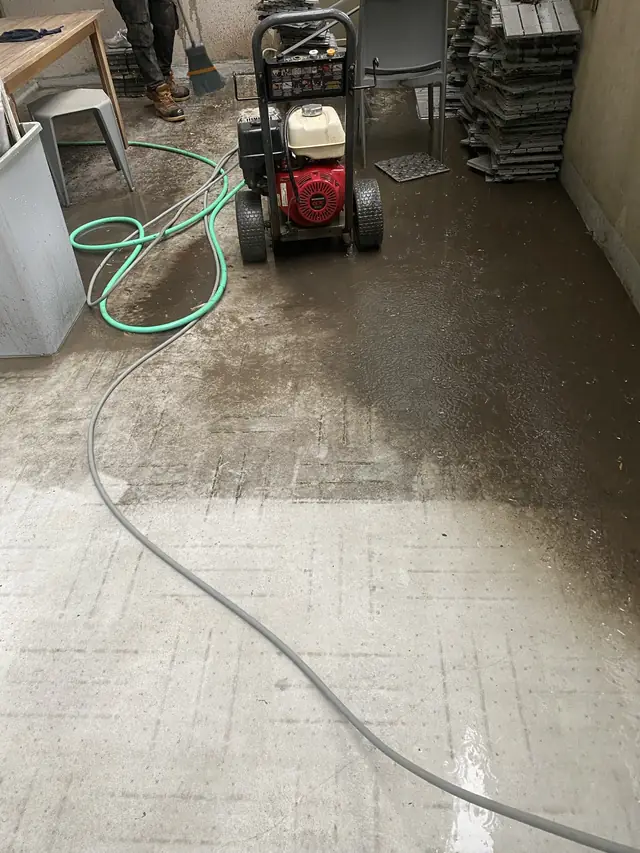
Short answer: Condo parking garages collect road salt, oil and grit that stain concrete, clog drains and track into lobbies. Most buildings schedule a full wash in spring after the salt season, with spot cleaning of oil and drive lanes as needed, planned in zones so residents can still park.
Why garages need regular washing
In Ontario winters, vehicles carry road salt and slush into garages. As it dries it leaves white residue and gritty film, and salt-laden water is hard on concrete, rebar and drains. Oil drips stain parking stalls and become slip hazards. A clean garage is also easier to inspect for cracks, leaks and drainage problems.
How a garage wash is done
- Sweep and remove loose debris and grit first
- Pre-treat oil and grease stains with degreaser
- Hot-water pressure washing of floors, drive lanes, ramps and curbs
- Wall, column and ceiling washing where needed
- Water recovery or drain protection according to building and municipal requirements
Planning around residents
Work is usually done in zones, with notice to residents of which levels and stalls are affected and when. Evenings and weekends can reduce disruption. We coordinate with property managers on access, signage and timing.
When to schedule
Many buildings book a wash in spring, after the salt season ends, and add a fall clean before winter. High-traffic entrances and oil-prone areas may need extra attention. See our parking garage cleaning service and commercial power washing.
Need help with your property?
Living Water has cleaned and restored 7,500+ properties across Toronto and the GTA since 1998. Call (416) 663-8000 or request a free quote.