
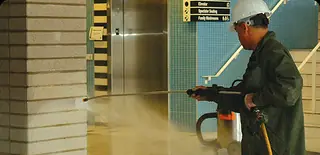
Short answer: Elevator pits collect garbage, dust, oil and water over time, creating fire, slip and environmental hazards for riders and maintenance crews. Building managers should have pits inspected during routine elevator maintenance and professionally cleaned whenever debris, oil, standing water or odours are present — and immediately after flooding or a sewage backup.
Why elevator pits get dirty
The pit sits at the lowest point of the hoistway. Debris falls through door gaps, hydraulic and lubricating oil can leak, and groundwater, sprinkler discharge or sewage backups collect there. Because nobody sees it, contamination builds up unnoticed.
Warning signs
- Garbage or dust accumulation
- Standing water, mud or sludge
- Oil sheen or hydraulic fluid on the floor
- Foul odours from the hoistway
- Visible cracks or water entry
What professional elevator pit cleaning includes
- Coordination with your elevator service provider so the elevator is locked out safely
- Removal of debris, sludge and standing water
- Oil spill clean-up and proper disposal of hazardous waste
- Pressure washing and degreasing of the pit floor, walls and equipment
- Sanitizing and deodorizing, especially after sewage backups
- Crack repair and pit painting where required
Why use a specialist?
Pit work involves confined spaces, moving equipment and contaminated waste. Elevator companies across Ontario refer pit cleaning to specialists like Living Water so their mechanics can focus on the equipment.
Need help with your property?
Living Water has cleaned and restored 7,500+ properties across Toronto and the GTA since 1998. Call (416) 663-8000 or request a free quote.