
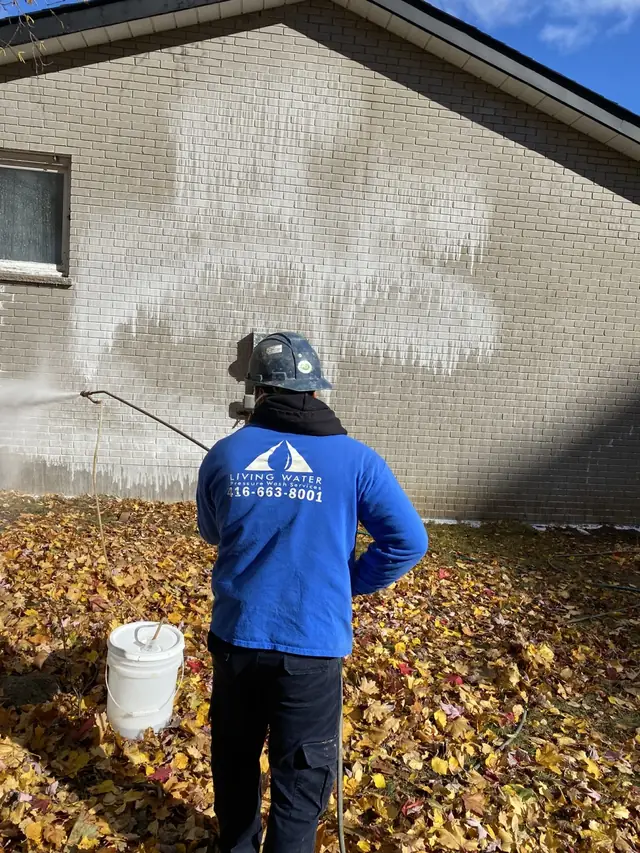
Short answer: Graffiti is best removed quickly with a remover matched to the paint and the surface — solvent-based removers for spray paint and markers, followed by controlled low-to-medium pressure rinsing — rather than high pressure alone, which drives paint deeper into porous brick and concrete. Anti-graffiti coatings make future tags much easier to remove.
Why fast removal matters
Fresh paint sits closer to the surface and comes off more cleanly. The longer it cures, the deeper it penetrates porous materials, and quickly removed tags are less likely to attract more.
Approach by surface
| Surface | Typical approach |
|---|---|
| Brick | Remover dwell, then low-pressure hot rinse; poultice for ghosting |
| Concrete | Remover plus hot-water pressure rinse |
| Natural stone | pH-appropriate remover, gentle rinse, poultice if needed |
| Metal & painted surfaces | Mild solvent that lifts tag but not factory finish |
| Glass | Solvent and blade; etched graffiti needs polishing or film |
Anti-graffiti coatings
Sacrificial coatings come off with the graffiti and are re-applied; permanent coatings let tags be wiped or washed off repeatedly. Both should be breathable on masonry.
Need help with your property?
Living Water has cleaned and restored 7,500+ properties across Toronto and the GTA since 1998. Call (416) 663-8000 or request a free quote.