
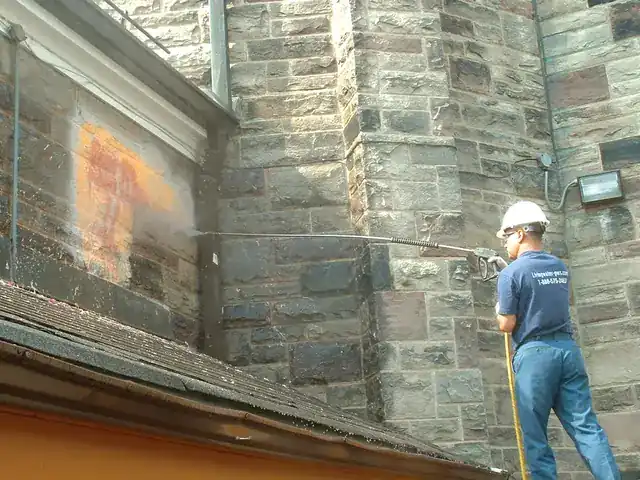
Short answer: Historic brick and stone should be cleaned with the gentlest method that works: low-pressure water, steam or specialist cleaners, tested on a small hidden patch first. Aggressive pressure washing or abrasive blasting can strip the hard fired face of old brick, open the pores and erode soft lime mortar, causing damage that is expensive to reverse.
Why old masonry is different
Many older Toronto buildings use soft, lower-fired brick, sandstone, limestone or lime-based mortar. The outer face of a brick protects the softer interior. Once that face is stripped, the brick absorbs more water, weathers faster and can spall in freeze-thaw cycles. Mortar softer than modern cement-based mixes can wash out under pressure, leaving open joints.
What not to do
- Do not use high-pressure washing or dry abrasive blasting on soft brick or stone.
- Do not use strong acids without testing; they can etch stone and leave salts behind.
- Do not seal damp masonry with a film-forming sealer, which can trap moisture.
- Do not repoint with hard modern cement mortar over lime mortar without advice from a mason.
Gentler methods that work
- Low-pressure water washing with a masonry-safe cleaner for general soiling and biological growth.
- Steam and hot-water cleaning for grime and some coatings with minimal abrasion.
- Poultices to draw out stains from porous stone.
- Soda or fine media blasting at low pressure for coatings such as paint, chosen only after a test patch. See is sandblasting safe for brick?
Always test first
A responsible cleaner tests the method on a small, inconspicuous area and checks the result in dry daylight before touching the main facade. The test shows whether the surface is changing, which pressure and cleaner are safe, and how much paint or staining will come off.
Paint removal from heritage brick
Old paint on historic brick is often the hardest job. The method depends on the paint type, the brick hardness and whether lead paint may be present. Read our guide to removing paint from brick for how the options compare, and our heritage restoration page for the work we do on historic buildings.
Efflorescence and salts
White salt deposits are common on older masonry and are a sign of moisture moving through the wall. Cleaning removes the deposit, but the moisture source should be fixed too. See how to remove efflorescence.
Choosing a contractor
Ask which methods they would use and why, whether they do a test patch, how they protect windows and landscaping, and whether they carry liability insurance and WSIB clearance. For heritage-designated buildings, check whether your municipality requires approvals before changes to the exterior. Living Water has been cleaning and restoring masonry in Toronto and the GTA since 1998 and carries $5M liability insurance; request a free assessment.
Need help with your property?
Living Water has cleaned and restored 7,500+ properties across Toronto and the GTA since 1998. Call (416) 663-8000 or request a free quote.